


Ayurveda’s Definition of Health
prasanna atmenindriya manaha svasthya ityabhidheeyate
(Su.Sū.15)
“The one established in Self, who has balanced doshas (vata, pitta, and kapha), agni (digestion/metabolism), and dhatus (tissues), proper elimination of wastes and proper bodily processes, and who is filled with contentment and bliss, this is considered to be a healthy person.”
This is the definition of health presented in the Śushruta Samhita, an Ayurvedic classical text. The word “sama” is repeated three times in this sutra. It means balanced, and the concept of balance is central in Ayurveda. Since we live in a world where movement is constant, and things are always changing (indeed change is the only thing that is constant), balance is a dynamic process that itself is ever changing. When we learn how to self-balance, using the principles of Ayurveda, life becomes a beautiful dance, as joyful and as effortless as dancing with our Beloved.
Your Unique Nature
In Ayurveda, every individual has a unique “prakruti” or a unique constitutional balance point. Your prakruti is based on your doshas– the physiological manifestation of the five elements. We each have a unique ratio of the elements within us. Some people naturally have more of the subtle elements of space and air (vata) and maybe they tend to be creative types with fast minds and slender, angular features. Some people have more fire in their constitutions (pitta) and tend to be a little more aggressive and ambitious, and some naturally lean more towards the water or earth elements (kapha) and are naturally grounded and compassionate. (If you are unsure of your prakruti, seek out the advice of a qualified Ayurvedic physician or practitioner.)
Balancing with Opposites
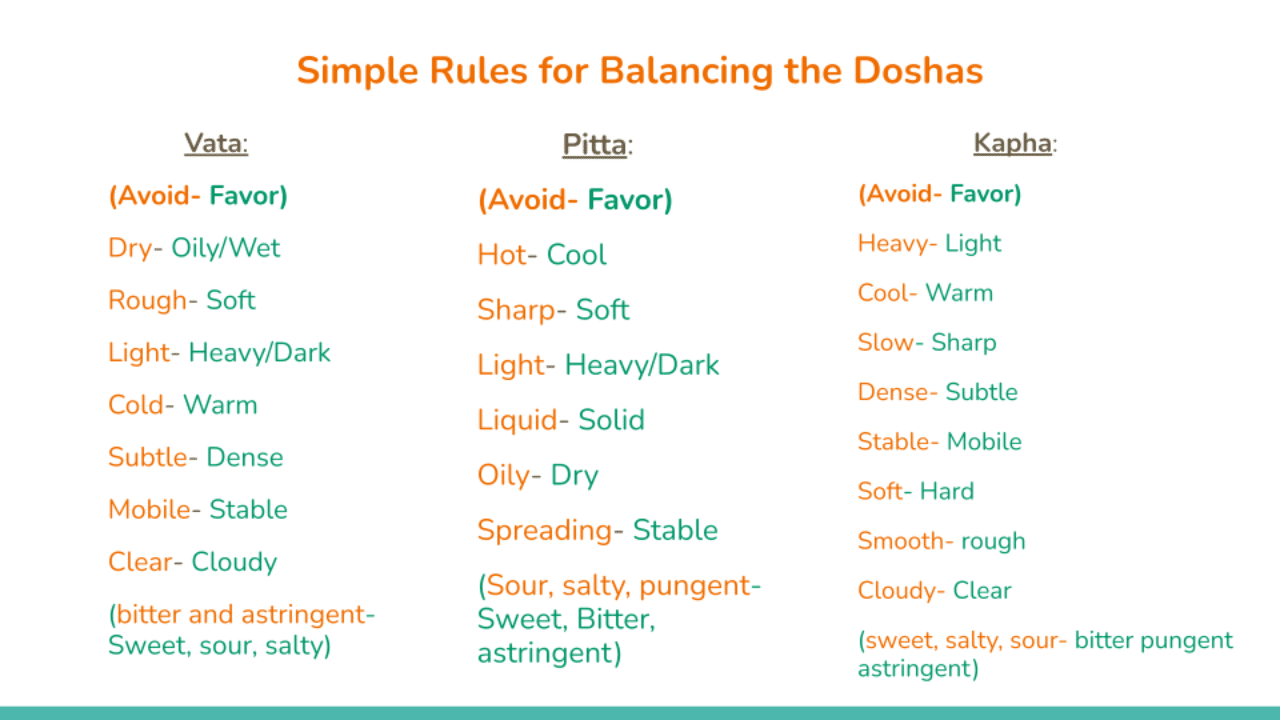
We all have all three doshas within us. Learning to listen to your own body, and read the signs and symptoms of an excess in one or more doshas is a key principle in Ayurvedic wellness. The most common and effective way to balance your doshas is by the application of opposite qualities. Example: If you have a hot, burning rash on your leg, ingesting or applying cooling herbs such as aloe or neem will naturally help to reduce the hot, pitta-type quality that is presenting itself. The art of learning how to balance with opposites is both extremely simple, and infinitely complex. It begins with listening to your body and identifying which dosha and which quality is presenting itself, and mindfully applying an appropriate opposite quality.
The list below illustrates the qualities of each dosha in orange and the opposite (balancing) quality in green.
The Rhythms of the Seasons
Just as we have a unique elemental balance within us, the seasons in nature also have their own elemental influence, which affects us too. As we balance for our prakruti which is ongoing, we should also adjust for seasonal changes by the mindful application of opposites.
Spring: During this season, the snows are melting and things are beginning to grow. At this time of the year, the wet, earthy, and anabolic qualities of kapha dosha predominate. This is a time when excess kapha in the environment can create cough, congestion, and runny nose. To balance excess kapha, favor foods that are light, bitter, pungent, and astringent. Bitter greens like arugula and dandelion which are shooting up during this time are a good thing to add to your diet. Stay warm and active as you meet the fresh, dewy beauty of the spring season.
Summer: The height of summer is pitta season, and the extra heat experienced during this time of the year can create pitta imbalances such as fever, rashes, and burning sensations. Make sure to not over expose yourself to the sun during the summer season and favor foods and activities that are cooling.
Fall: Fall is vata season. The leaves are drying up and blowing in the wind. During the Fall, make sure to protect yourself from the wind and cold and favor warm, well cooked, and grounding foods.
Winter: Winter is a mix of vata and kapha, where the cold quality predominates (kapha and vata are both cold in nature). Naturally, we should be enjoying the warm quality as much as we can in the form of food, family, and fellowship during the winter season.
Leaning into the Dance
Finding balance is an ever changing process because we live in an ever changing world. What should be constant is not what we do, but how we listen and respond. Learning to pay attention to the body, and the qualities that are presenting as symptoms, will allow us to make better choices and help to course-correct before subtle imbalances take the form of more serious disturbances and diseases.
Ayurveda is a medical science that marries common sense with spiritual logic. An intuitive art that helps us find balance as we dance with the natural world, Ayurveda is for everyone.
If you’d like to learn more about Ayurveda, check out any of the books by Dr. Vasant Lad, or find a qualified professional who can help you learn how to self balance for your unique body and stage of life.
Article written by Rosa Harper
*Medical disclaimer:
This content is for educational purposes only and does not replace professional medical care.